
The Problem
Antiquated software and a vendor that couldn’t keep up
Nirvana started with a third-party administrator (TPA) for the reason most new insurers do. The book was young, claims volume was thin, and building in-house made no sense yet. The team asked around, looked for transportation expertise, and landed on a legacy vendor that was well known in the trucking space.
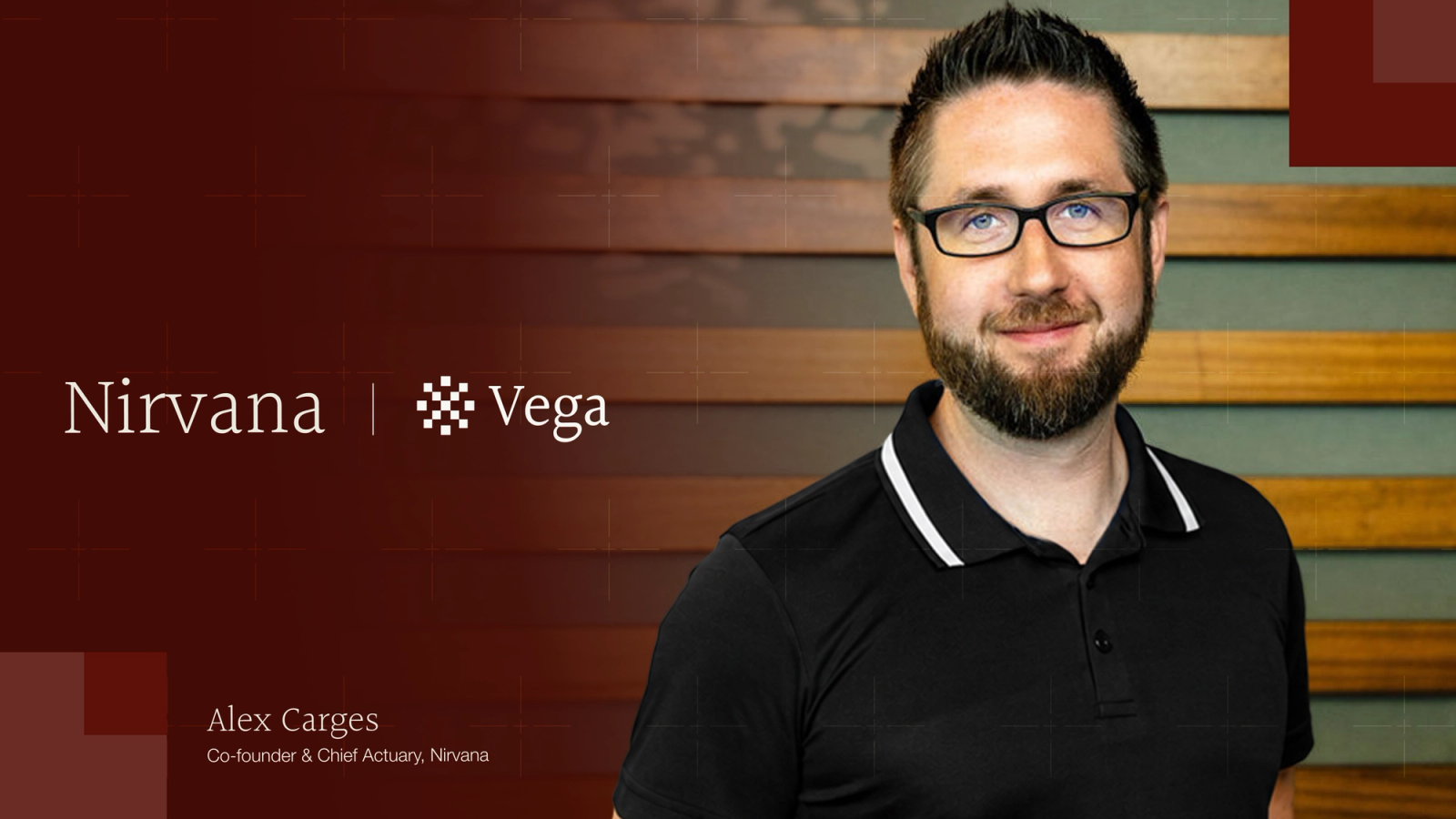
The first warning came on day one. “I wasn't surprised, it looked like the system was built in the 90s — one step above DOS. You had to click through 50 different things to get to the right information. These players are far behind modern standards,” said Alex Carges, the Co-founder and Chief Actuary of Nirvana.
The interface turned out to be the smallest problem. Within the first year, the pattern was clear across every part of the operation. Claims took too long to settle. Customers were frustrated and brokers were frustrated. Claims stayed open while bills accumulated, which pushed payouts higher than they should have been. And almost none of the claims data Nirvana needed to sharpen its underwriting was making it back to the team.
Nirvana pushed for service level agreements. While the vendor agreed to them, they kept missing them.
The clearest measure of the problem was what it took to answer a basic question. When a broker or an insured asked where a claim stood, there was no system to check.
“There was no system, no central place we could go to see information. We'd have to call their managers, sometimes even their president, and say your team isn't responding to us, what's going on here.”
Every status update ran through a phone call, then got relayed back to the customer and the broker by Nirvana’s own team. For an insurer that had built its underwriting and pricing around fast data, claims had become the one part of the business operating on nobody’s schedule but the vendor’s.
The Solution
Four non-negotiables, and a six-month transition done in half the time
Nirvana ran a full evaluation of the market. Established brand names with decades of history, smaller regional shops, and the newer technology-forward players. Part of the goal was diagnostic: the team wanted to know whether the quality gap they had experienced was universal to the category or specific to their vendor.
Four criteria came out of that process.
Claims expertise in transportation
In trucking, a single bad liability decision can mean a million-dollar payout. Nirvana needed adjusters who understood the nuance of the space, not generalists working from a script.
Genuine technology depth
Not a modern-looking portal, but technology and AI applied to shortening cycle times, sharpening liability decisions, and producing insight the underwriting team could act on.
A clean transition
Nirvana already had a sizable book and real claims volume in flight. Moving it could not disrupt the customer experience or consume the internal team.
Room to scale
Nirvana was writing a few hundred million in premium and growing quickly. Whoever took the book had to still fit in three years.
“In a nutshell, it was the right combination of technology and experience. In transportation, a bad claims decision means a million-dollar payout, so we wanted people who genuinely understood the space, and who were at the forefront of using AI to drive better outcomes.”
Vega was the only partner that cleared all four.
The transition was scheduled for six months, but it finished much quicker than expected. Vega now supports the full claims lifecycle for Nirvana, from FNOL and intake through coverage and liability assessment, early litigation warning, recovery, settlement, and reporting.
AI-driven workflows absorb the routine administrative work so adjusters spend their time on early intervention and liability clarity, and Vega’s standard is first contact with the insured within three hours of FNOL.
There was one open question going in. Nirvana was leaving a top 10 name for a newer one, and the concerns were the obvious ones: staffing depth, volume capacity, bench expertise.
“In the grand scheme of things, we didn’t give anything up. Honestly, versus our previous experience with the top 10 TPA, Vega was far ahead. More responsive, better trained, and they could keep up with our volume.”
The Results
Faster claims, lower losses, and a feedback loop into pricing
Claims that used to sit for months now close in weeks. Nirvana’s average resolution time is 29 days, against a previous 70+ days.
Additionally, there was a 5-8% improvement in loss ratio. Some of that is arithmetic: a claim that closes faster stops accruing cost. The rest comes from Vega contesting the claims that deserve contesting. Litigation rates fell, and AI-driven early warnings flag large-loss exposure while there is still time to manage it.
Camera footage as evidence
Nirvana captures telematics footage across its fleet book, and Vega built that into the claims process. On every severe claim, Vega pulls the footage and uses it to determine whether the claim should be settled or fought.
“We’re able to pull that camera footage every time a severe claim happens, and use it to fight claims where our insureds aren’t at fault. That has reduced payouts.”
It is a capability that depends on the insurer and the claims operation working from the same data, which is exactly what a traditional TPA arrangement is not built to do.
The second-order effects
The changes Nirvana didn’t plan for have turned out to matter as much as the ones it did.
Claims insight now feeds underwriting
Vega’s adjusters surface patterns from handling the book and route them to Nirvana’s actuarial and underwriting teams. In one case, Vega flagged that specific policy language was producing higher payouts than it should have been, leading Nirvana to rewrite the form.
Reserving improved, and reinsurers noticed
Faster, more accurate reserving gave Nirvana’s reinsurance partners more confidence in the book, which translated directly into capacity to keep growing.
Pricing models iterate faster
The speed of the claims-to-actuarial data flow changed how quickly Nirvana can refine its pricing.
Looking Ahead
Compounding gains in pricing, reserving, and capacity
Nirvana continues to expand beyond trucking into other parts of commercial auto, and the claims operation is scaling with it rather than constraining it. Every claim Vega handles feeds the pricing models, tightens the reserving, and strengthens the case Nirvana makes to its reinsurers.
“For MGAs feeling the pain of other TPAs, who want a truly proactive partner, there’s nobody else.”
Alex Carges
Co-founder and Chief Actuary, Nirvana